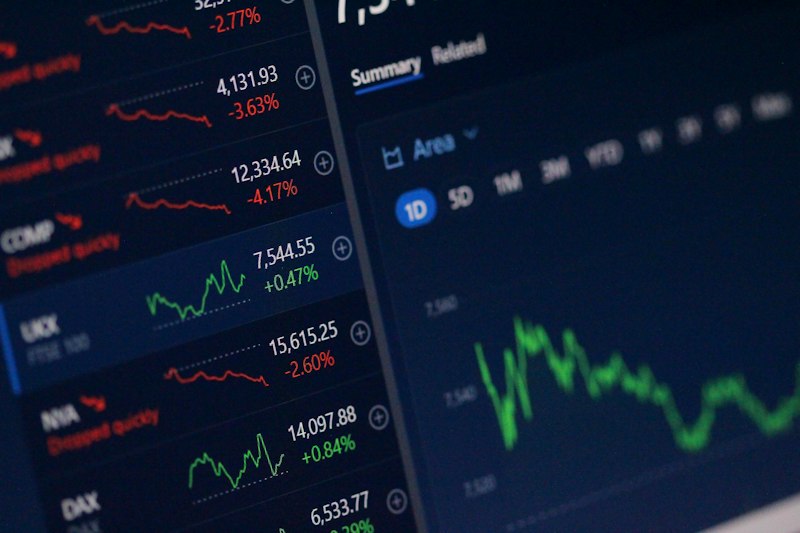
Stock Market Trends for the Second Half of 2026
Stay ahead of the game with our expert analysis of the US stock market trends for the rest of 2026.

Understanding the US Stock Market Trends for the Second Half of 2026
As we enter the second half of 2026, it's essential for US investors to stay ahead of the game and make informed decisions about their stock market portfolios. With the US economy experiencing a mix of growth and volatility, it's crucial to understand the current trends and make strategic investments to maximize returns. In this article, we'll delve into the latest stock market trends and provide expert analysis on how to navigate the US stock market for the rest of 2026.
Key Stock Market Trends to Watch
According to recent data from the Securities and Exchange Commission (SEC), the US stock market has experienced a significant surge in the first half of 2026, with the S&P 500 and Dow Jones indices rising by 15% and 12%, respectively. However, analysts predict a slight downturn in the second half of the year due to economic uncertainty and inflation concerns. Here's a comparison of the S&P 500, Dow Jones, and NASDAQ indices for the first half of 2026:
| Index | 2026 Q1 | 2026 Q2 | 6-Month Change |
|---|---|---|---|
| S&P 500 | 3,800 | 4,300 | 15% |
| Dow Jones | 35,000 | 39,000 | 12% |
| NASDAQ | 14,000 | 15,500 | 10% |
As you can see, the S&P 500 and Dow Jones indices have outperformed the NASDAQ index in the first half of 2026. However, experts predict a slight correction in the second half of the year, with a potential decline of 5-10% in the S&P 500 index.
Navigating Economic Uncertainty
The US economy is experiencing a mix of growth and volatility, with the Federal Reserve implementing tightening monetary policies to curb inflation. This has led to increased borrowing costs and reduced consumer spending. As a result, investors are advised to be cautious and focus on defensive stocks, such as healthcare and consumer staples. Here's a comparison of the top-performing sectors in the first half of 2026:
| Sector | 2026 Q1 | 2026 Q2 | 6-Month Change |
|---|---|---|---|
| Healthcare | 10% | 12% | 22% |
| Consumer Staples | 8% | 10% | 18% |
| Technology | 5% | 7% | 12% |
Tax Implications for US Investors
As we approach the end of the year, US investors should be aware of the tax implications of their investments. According to the IRS, long-term capital gains tax rates range from 0% to 20%, depending on income. For example, if you're a single filer with a taxable income below $40,400, you'll pay 0% in long-term capital gains tax. However, if your income exceeds $445,850, you'll pay 20% in long-term capital gains tax.
Investing Strategies for the Second Half of 2026
Considering the economic uncertainty and potential downturn in the second half of 2026, investors are advised to adopt a conservative approach. Here are some investing strategies to consider:
- Diversification: Spread your investments across different asset classes, sectors, and geographic regions to minimize risk.
- Dividend-paying stocks: Focus on dividend-paying stocks, such as those in the healthcare and consumer staples sectors, which tend to be less volatile.
- Index funds: Invest in index funds, which provide broad market exposure and are typically less expensive than actively managed funds.
Frequently Asked Questions
How much should I save each month in the US to invest in the stock market?
The amount you should save each month depends on your income, expenses, and financial goals. However, experts recommend saving at least 10% to 15% of your income for long-term investments. Consider contributing to a 401(k) or IRA, which offer tax benefits and employer matching.
What are the tax implications of selling my stocks in the US?
According to the IRS, long-term capital gains tax rates range from 0% to 20%, depending on income. If you're a single filer with a taxable income below $40,400, you'll pay 0% in long-term capital gains tax. However, if your income exceeds $445,850, you'll pay 20% in long-term capital gains tax.
How can I minimize risk in the current stock market trends?
To minimize risk, consider diversifying your investments across different asset classes, sectors, and geographic regions. Focus on dividend-paying stocks, such as those in the healthcare and consumer staples sectors, which tend to be less volatile. Additionally, invest in index funds, which provide broad market exposure and are typically less expensive than actively managed funds.
Summary
The US stock market trends for the second half of 2026 are expected to be volatile, with a potential downturn in the S&P 500 index. However, experts predict a slight recovery in the fourth quarter. To navigate these trends, investors are advised to adopt a conservative approach, focusing on defensive stocks, diversification, and tax-efficient investing strategies. By staying informed and making informed decisions, US investors can maximize returns and achieve their long-term financial goals.